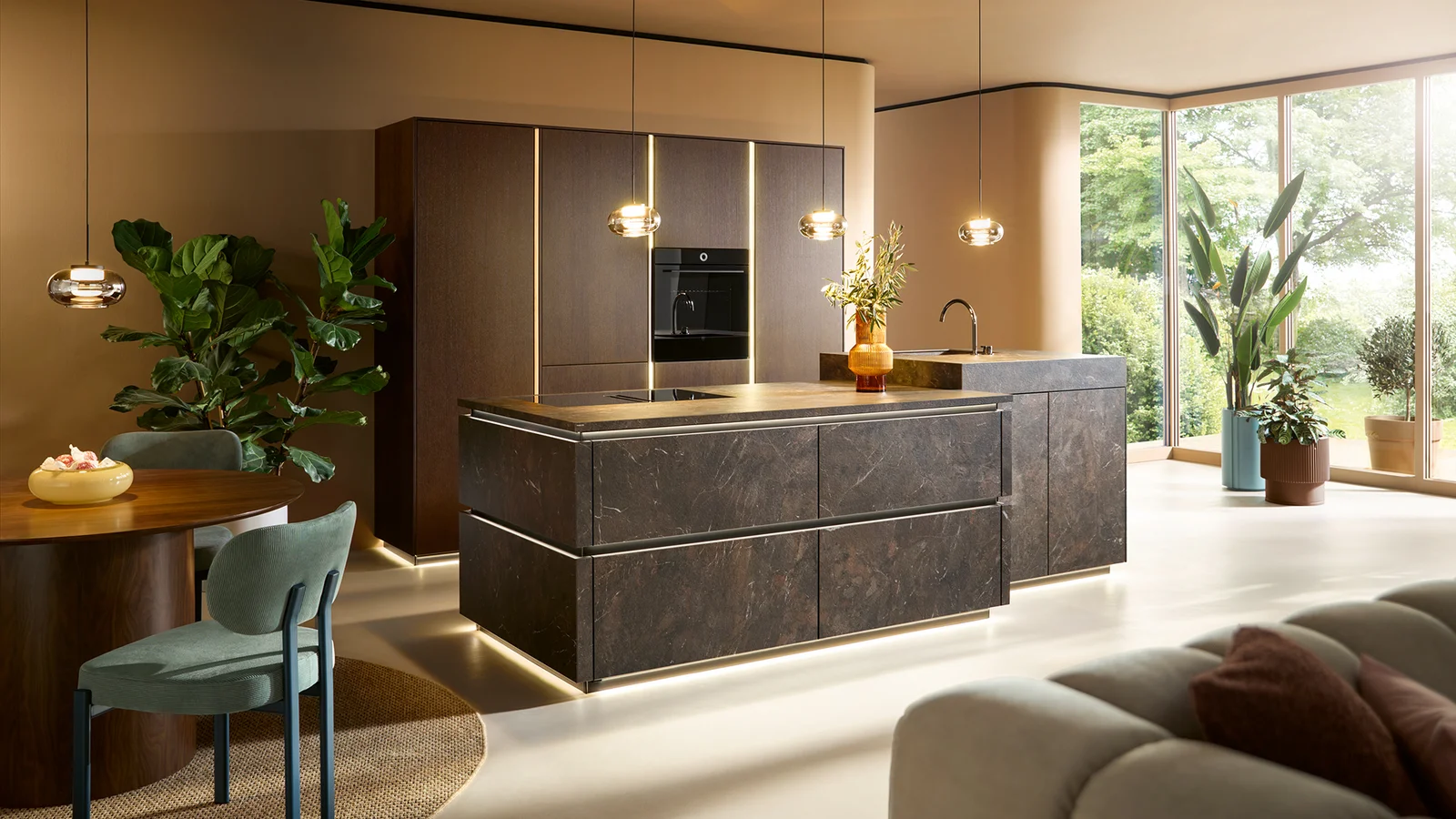
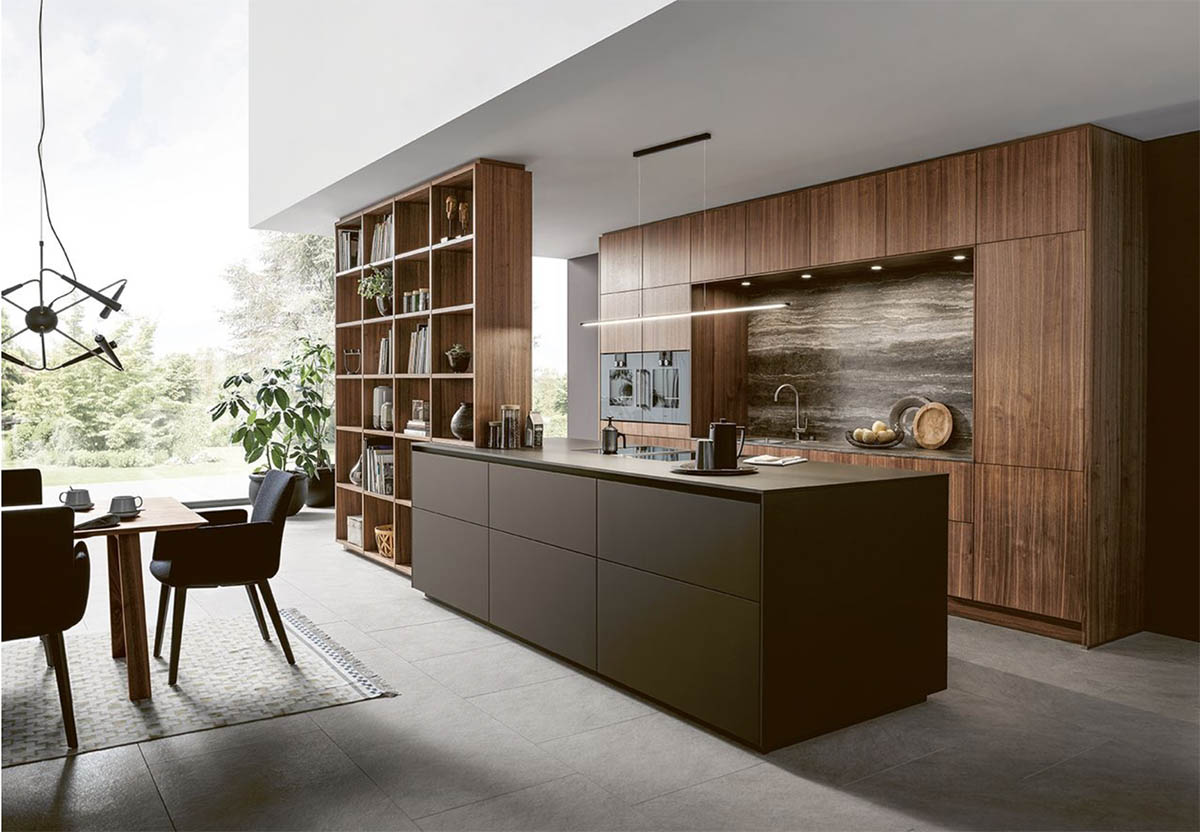
Pull open a base drawer in a ten-year-old kitchen and you learn everything about how it was built. If it still glides shut without a bang, sits square in its frame, and shows no swelling along the cabinet under the sink, someone engineered it properly.
This is where German kitchens earn their reputation, and why they tend to outlast the ordinary units sold on price alone. The gap is not marketing. It is measurable, and it comes down to standards, materials and hardware that most buyers never think to ask about until something fails.
The standard behind the door: RAL-GZ 430
Most kitchens carry no independent quality mark at all. German-made ones often do. The relevant benchmark is RAL-GZ 430, the furniture quality specification maintained since 1973 by the Deutsche Gütegemeinschaft Möbel, whose seal is the “Golden M”.
It is not a logo a factory prints on a brochure. To carry it, cabinets are laboratory-tested for load capacity, stability and safety, and screened for harmful substances such as formaldehyde and volatile organic compounds released into the room.
That last point matters more than it sounds. A cheap carcass can look identical on day one and quietly off-gas for months. A tested one has to prove it stays within strict emission limits before it is allowed near your food and family. When a kitchen is built to a published standard rather than a price target, you inherit the difference in air quality, in how the doors hang after a decade, and in whether the cabinet under the sink survives the first serious leak.
What German kitchens get right in the carcass
Strip away the finish and a kitchen is a set of boxes. The boxes are where German kitchens quietly win.
Take Schüller, founded in Herrieden, Bavaria, in 1966 and now producing over 150,000 kitchens a year for 35 countries from that single site. Their shelves are built at 1.9 cm thick for genuine load-bearing capacity, so a run of full dinner plates does not leave a bow after a year. Solid-wood cross members brace the carcass rather than a flimsy back panel doing all the work.
Water is the real test in a kitchen, and it is where corners usually get cut. On a Schüller worktop with laminate edging, the front underside is sealed with a moisture-resistant laminate and the joints are bonded with water-resistant adhesive, so the vulnerable front edge does not drink up spills and swell. Ordinary chipboard with an exposed edge does exactly that, and you cannot un-swell a cabinet.
Then there is the sister brand, next125, also made in Herrieden. Over 1,500 people build more than 118,000 of these kitchens a year, each cut and assembled on CNC lines to tolerances measured in fractions of a millimetre and checked at every stage. That precision is why the gaps between doors stay even and the whole run reads as one continuous surface rather than a set of separate cupboards.
The hardware you touch every single day
You never see a hinge, yet it is the part of the kitchen you operate most.
Premium German kitchens are typically fitted with hardware from Blum, the Austrian specialist founded in 1952, whose soft-close hinges are tested to 200,000 open-and-close cycles. Open a cabinet twenty times a day and that is more than a quarter of a century of use before the test even ends.
Drawers tell the same story. Blum’s Tandem runners carry the drawer on concealed nylon rollers with integrated soft-close and support loads up to around 45 kg, so a deep pan drawer stays level and quiet under real weight instead of sagging and rattling. Cheaper side-mounted runners feel fine in the showroom and start catching within a year or two. The everyday pleasure of a drawer that shuts itself softly is not a gimmick. It is the visible result of engineering you paid for once.
The honest trade-off
The real argument for German kitchens is not that they look better on installation day, because plenty of kitchens do, but that they are still square, quiet and dry when the ordinary ones have started to fail. If you want to see the construction up close, the difference is obvious the moment you open a drawer.
Visit our showroom to handle a Schüller and next125 kitchen in person, and book a design consultation so we can plan one properly around your home.
Living with it: finishes and upkeep
A range cooker is a long relationship, so think about cleaning before you fall for a colour.
The cast-iron grates and brass burner caps reward a quick wipe while they are still warm rather than a weekly scrub, and the enamel oven cavity stays far easier to manage if you catch spills early instead of letting them bake on. ILVE offers finishes from classic stainless steel through to deep matte tones with brass or copper trim, and the honest steer is that stainless shows fingerprints most but ages most forgivingly, while a matte colour looks superb and asks for a little more care to keep pristine.
Whatever the finish, the burners and the cavity are what you use every day, so let those lead the decision and treat the colour as the final flourish. A cooker you keep clean and properly serviced will still be the heart of the kitchen long after the trend that inspired the shade has moved on.
Buy it as the anchor of the kitchen
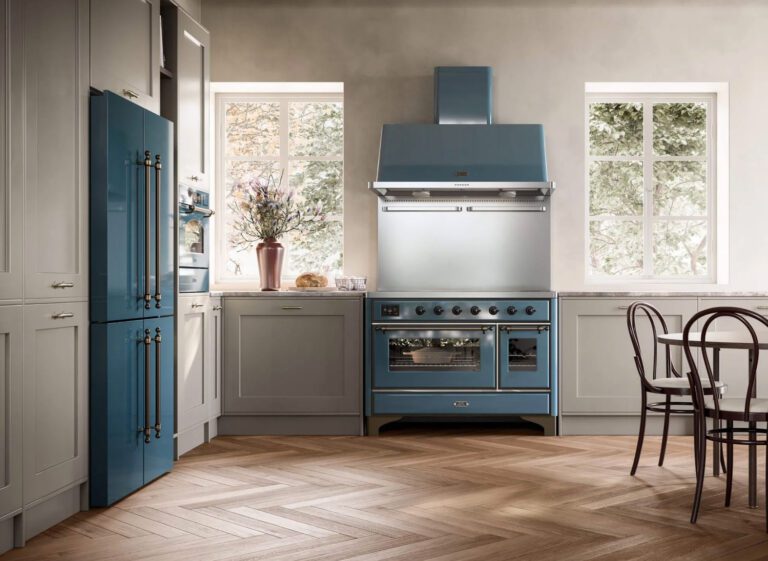
A range cooker changes how the whole kitchen reads. It becomes the focal point of the run, often centred under an extractor and flanked by symmetrical cabinetry, which is why it pays to decide on the cooker early in the design rather than fitting it in at the end.
The width, the fuel type and the colour, and ILVE offers finishes from classic stainless to deep matte tones with brass or copper trim, all feed back into the layout and the extraction you plan around it.
That is the case for treating a premium oven as a considered purchase rather than a last-minute line on the order. Choose the size for how you actually cook, choose dual fuel unless you have a firm reason not to, and let the cooker anchor the room it sits in. Come and see the ILVE ranges running in our showroom, and book a consultation so we can design the kitchen around the one you choose.