The oven is the one appliance in the kitchen you cannot upgrade with a gadget later. A worktop can be resealed and handles can be swapped, but the cooker is built into the run, wired and plumbed in, and you live with the choice for a decade or more. That is why a premium oven is worth slowing down over, and why the Italian range cookers from ILVE keep coming up when people want a centrepiece that also happens to cook seriously well.
Why an Italian range cooker earns its space
ILVE has built cookers in Italy for decades, and the Majestic range is still hand-assembled there rather than mass-produced on an anonymous line.
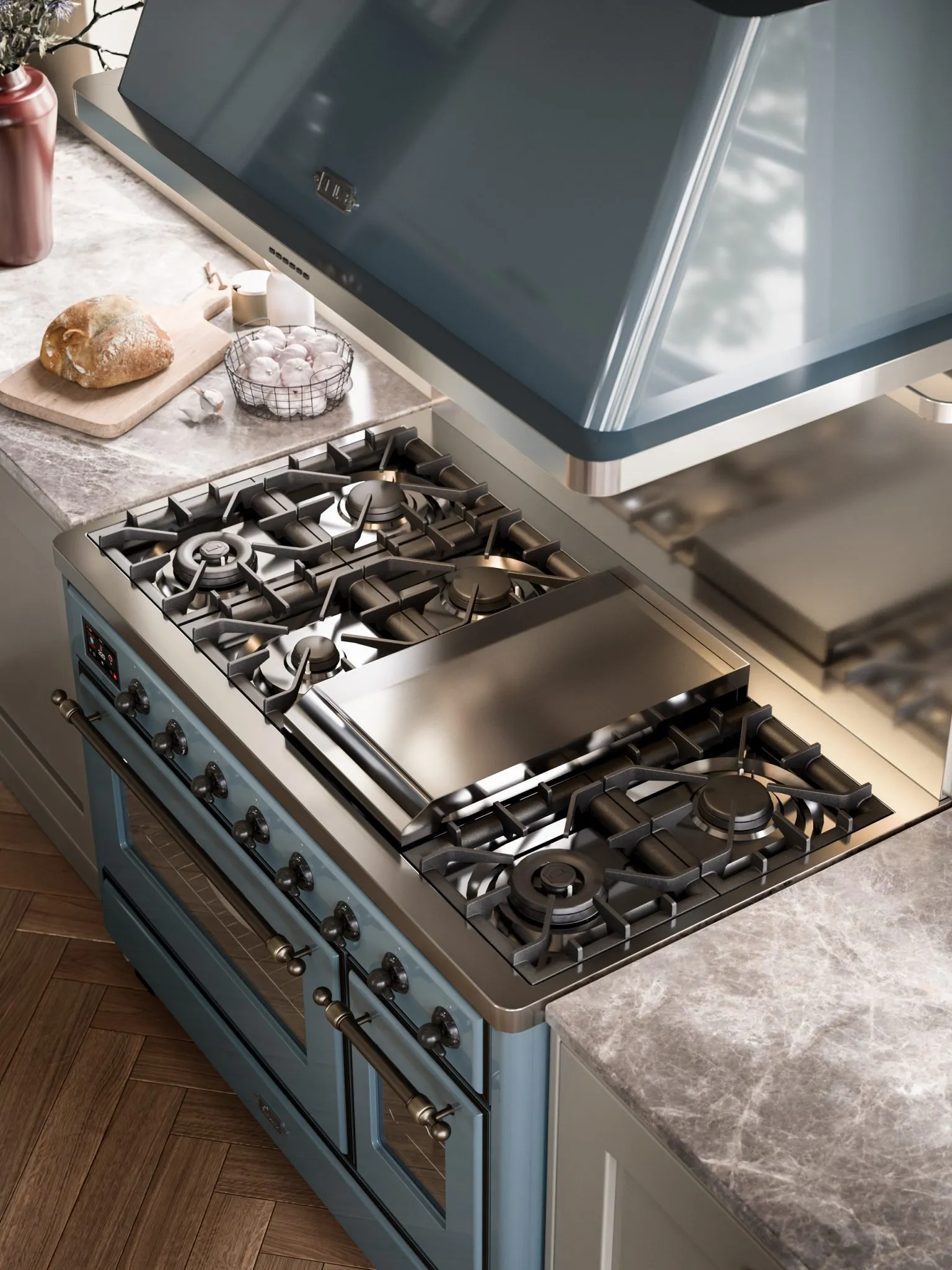
That matters in the details you feel. The gas burners are black brass dual burners that push up to 20,000 BTU for a hard, fast boil, then throttle right down for a genuine low simmer, which is the part cheap hobs get wrong. They sit under heavy cast-iron grates with a non-stick coating, so a pan slides across the surface and the grates wipe clean rather than staining.
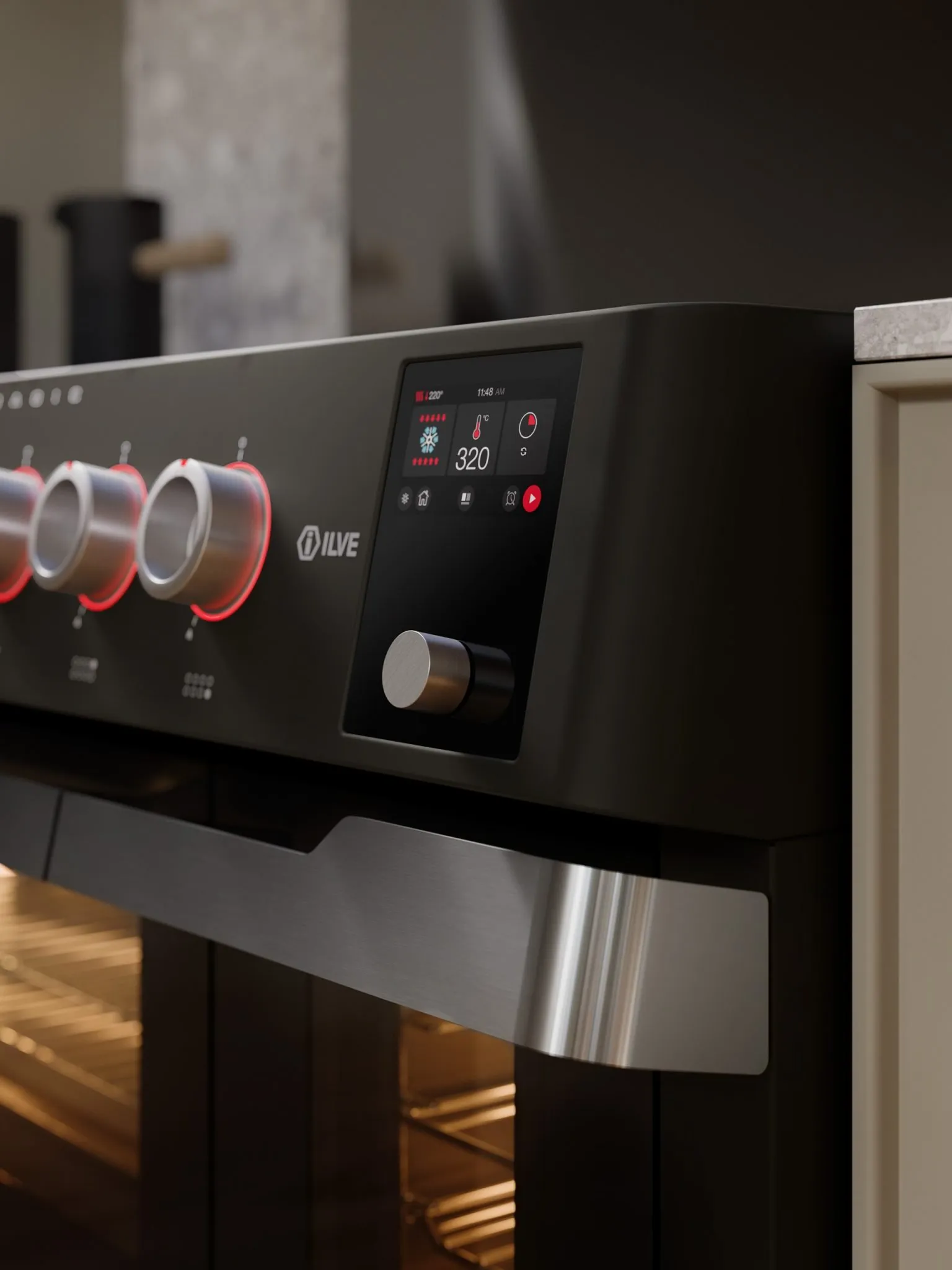
A premium oven in this class is a proper tool, not a status object. The Majestic ovens are multifunction, with an electric rotisserie, a concealed grill element, precise thermostatic control and turbo-wave fan cooking that moves heat evenly around the cavity. If you have ever cooked two trays at once in an ordinary oven and found the top one done while the bottom stayed pale, that even airflow is the fix.
What separates a premium oven from an ordinary one
Look past the burners and the differences keep going.
ILVE fits a cool-touch triple-glazed door, so the front stays safe to touch while the cavity runs hot, which is a genuine consideration in a home with children rather than a spec-sheet flourish.
Then there is the dual-fuel question, and this is where an opinion is worth giving. For most serious home cooks, dual fuel is the sweet spot: gas burners on top for instant, controllable heat you can see, and an electric fan oven below for the stable, even temperatures that baking and roasting need. Full gas ovens have their devotees and induction has its speed, but the gas-hob-plus-electric-oven combination is the one that quietly suits the widest range of cooking, and it is why so many ILVE ranges are built that way.
Sizing and heat, done honestly
The temptation with a statement cooker is to buy the widest one that fits. Resist it slightly.
A 90 cm range with six burners covers almost everything a household cooks, gives you room to run several pans at once, and leaves worktop on either side for the landing space that actually makes cooking calmer. A 120 cm or 150 cm range is glorious in a large open kitchen, but in a compact room it eats the counter you need for prep, and an unused burner is just cast iron you clean around.
Heat output is worth reading properly too. A 20,000 BTU burner is superb for searing and for getting a large stockpot moving, yet you rarely want every burner at that output. What you want is range: one or two high-power burners for the heavy work and gentler ones for sauces and simmering. A good cooker gives you both, and the ILVE burners are designed to drop to a true low flame rather than cutting out, which is the thing you notice every time you melt chocolate or hold a curry at a bare simmer.
Plan the extraction around it
A serious hob needs serious extraction, and this is where range-cooker kitchens most often fall short.
As a rule the extractor should be at least as wide as the cooking surface, and ideally a touch wider, so it captures steam and grease coming off the outer burners rather than letting it drift onto your cabinets and ceiling. A 90 cm range wants a 90 cm hood as a floor, not a ceiling. Ducted extraction that vents to the outside clears heat and moisture far better than a recirculating filter, so run the ducting wherever the building allows it.
Height matters as much as width. A hood mounted too high loses its grip on the rising steam, while one set too low gets in your eyeline and your way over a tall stockpot. Decide the extractor at the same moment as the cooker, not after the cabinetry is in, because threading ducting through a finished kitchen is disruptive, messy and avoidable.
Living with it: finishes and upkeep
A range cooker is a long relationship, so think about cleaning before you fall for a colour.
The cast-iron grates and brass burner caps reward a quick wipe while they are still warm rather than a weekly scrub, and the enamel oven cavity stays far easier to manage if you catch spills early instead of letting them bake on. ILVE offers finishes from classic stainless steel through to deep matte tones with brass or copper trim, and the honest steer is that stainless shows fingerprints most but ages most forgivingly, while a matte colour looks superb and asks for a little more care to keep pristine.
Whatever the finish, the burners and the cavity are what you use every day, so let those lead the decision and treat the colour as the final flourish. A cooker you keep clean and properly serviced will still be the heart of the kitchen long after the trend that inspired the shade has moved on.
Buy it as the anchor of the kitchen
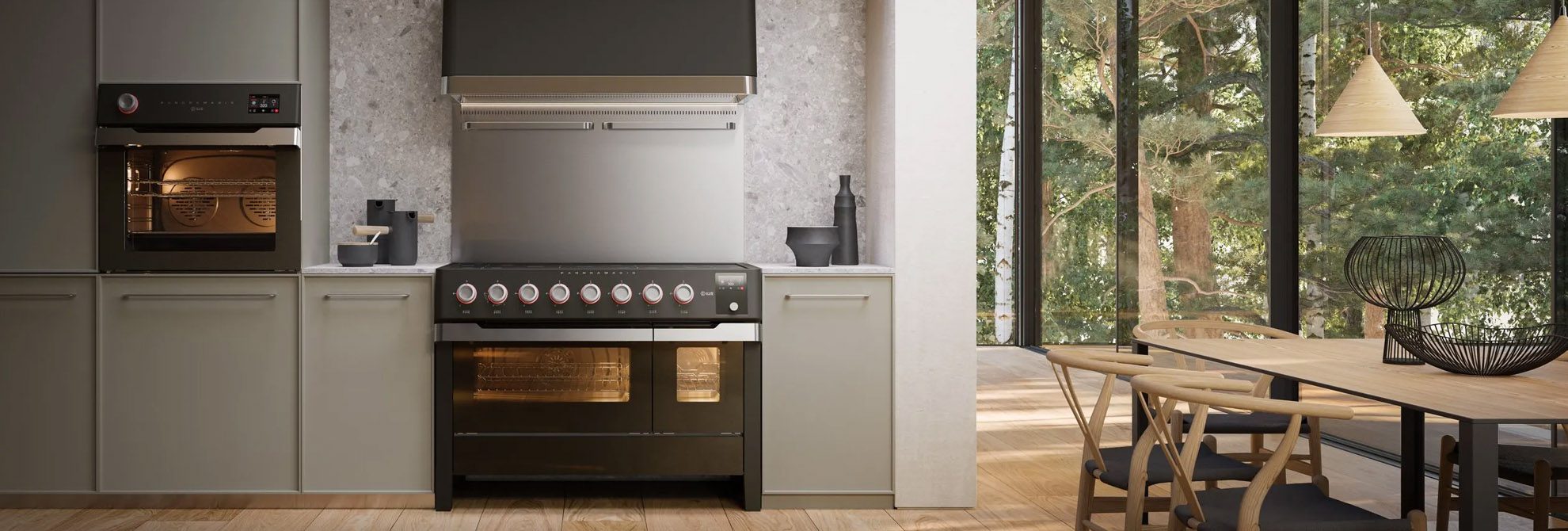
A range cooker changes how the whole kitchen reads. It becomes the focal point of the run, often centred under an extractor and flanked by symmetrical cabinetry, which is why it pays to decide on the cooker early in the design rather than fitting it in at the end.
The width, the fuel type and the colour, and ILVE offers finishes from classic stainless to deep matte tones with brass or copper trim, all feed back into the layout and the extraction you plan around it.
That is the case for treating a premium oven as a considered purchase rather than a last-minute line on the order. Choose the size for how you actually cook, choose dual fuel unless you have a firm reason not to, and let the cooker anchor the room it sits in. Come and see the ILVE ranges running in our showroom, and book a consultation so we can design the kitchen around the one you choose.