A good laundry room is not a luxury or an afterthought squeezed under the stairs. It is one of the highest-return rooms in a well-planned home, and it rewards the same care you would give the cooking space.
Plan the wet zone first
Every laundry room has a wet zone, and everything else arranges itself around it. Group the washing machine, the sink and any water supply together so plumbing runs short and drainage stays simple.
A utility sink here does the heavy work the kitchen sink should not: soaking stained clothes, filling buckets, rinsing muddy boots. Fit it with a tall mixer or a pull-out pre-rinse spray tap and it handles the awkward jobs a low kitchen tap makes miserable.
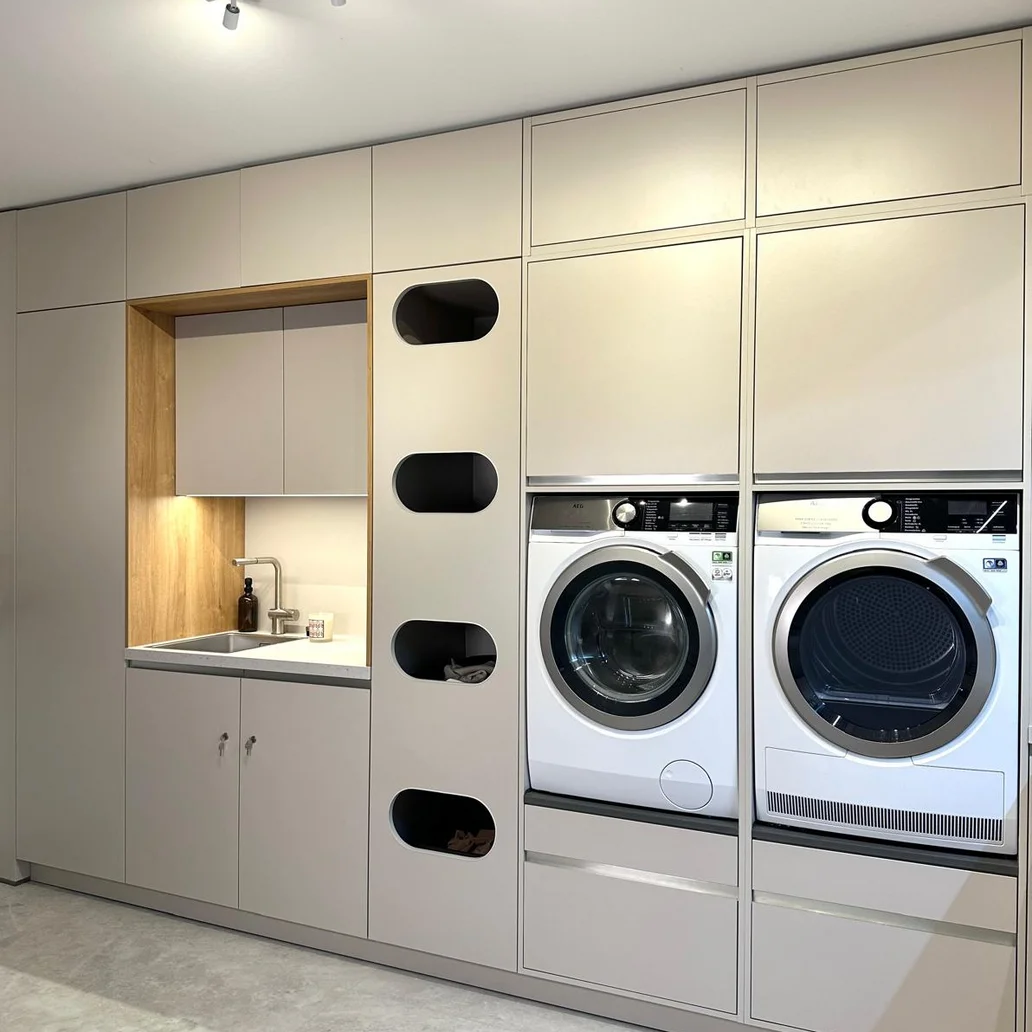
The classic decision is side by side or stacked. Setting the washer and dryer side by side lets you run a continuous worktop straight over both, which is the single most useful surface in the room for sorting and folding. Stacking them saves floor space in a narrow room and frees a wall for tall storage, at the cost of that folding surface. In a compact Maltese apartment the stacked layout often wins on space, while a house with a dedicated room should take the worktop every time.
Laundry room surfaces that take a beating
A laundry room worktop earns its keep differently from a kitchen one.
Choose a smooth, non-porous surface such as quartz, stainless steel or a solid acrylic, all of which wipe clean, resist water and will not snag a delicate fabric the way a rough or timber edge can. Skip the porous natural stones that stain when someone leaves a damp towel on them overnight.
Give yourself a run of worktop over the front-loaders even if the room is small. That strip becomes the folding station, the place damp shirts wait before they go on hangers, and the surface you never realised the kitchen was missing. It is the detail people notice most once they have lived with it.
Storage for the things that have no home
Half the point of a utility room is to absorb the objects that clutter everywhere else.
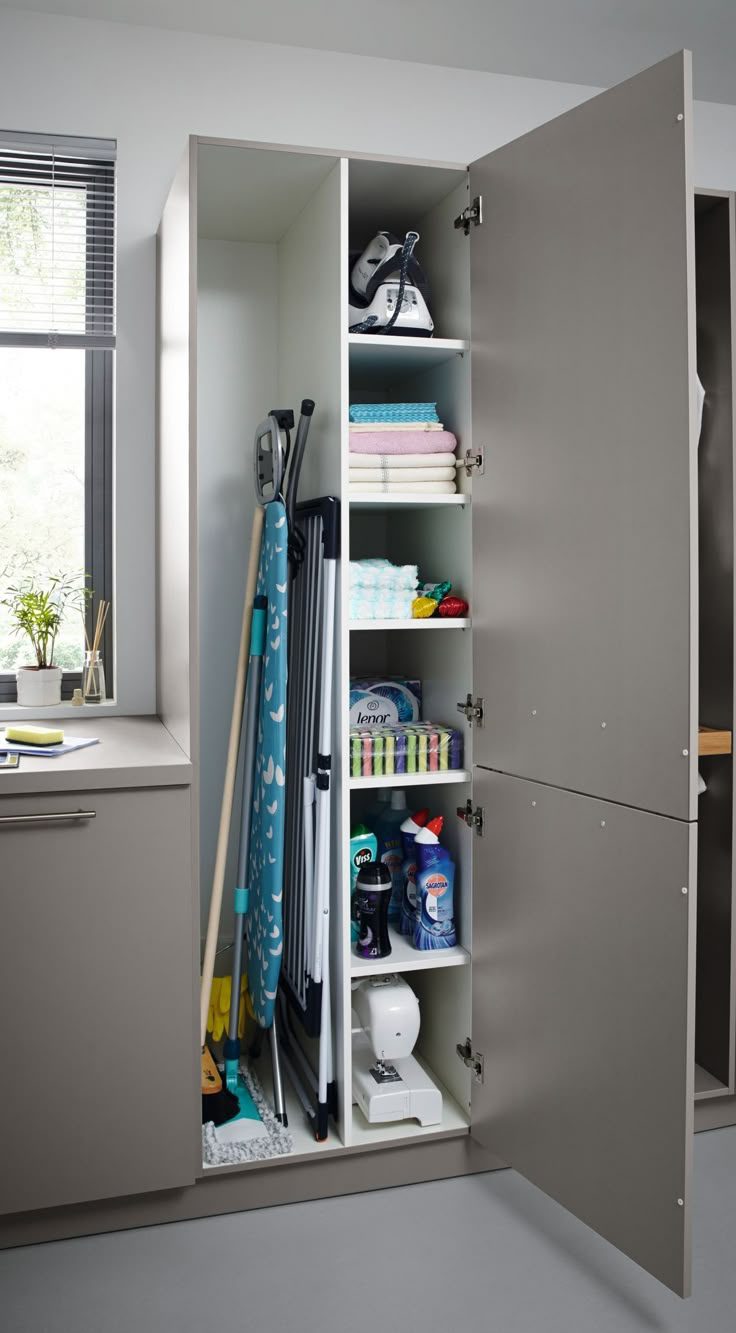
That means real, planned storage, not a single wall shelf. Tall cupboards swallow the upright vacuum, the mop, the broom and the ironing board so they stand out of sight rather than falling out of a corner. Closed cabinets keep detergents, softeners and cleaning sprays up and away from children while staying within easy reach.
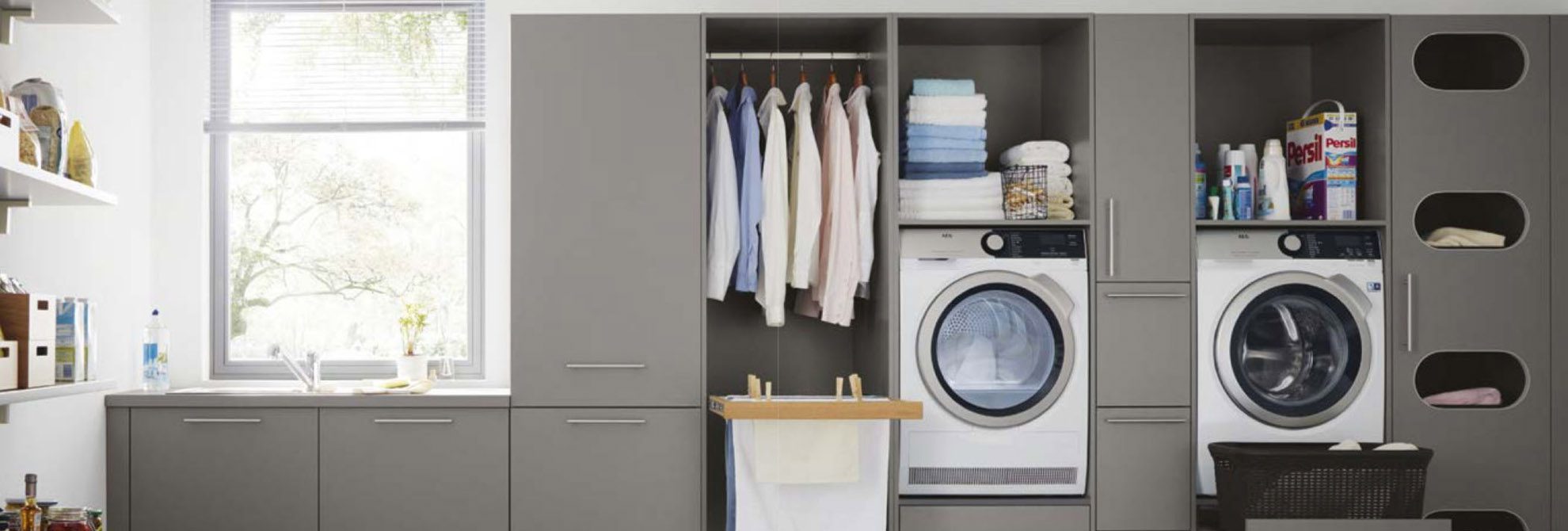
A little zoning goes a long way. A hanging rail for shirts straight out of the machine and a shallow cupboard for household objects, will keep the room working rather than becoming the place everything gets dumped. The same cabinetry that builds a good kitchen builds a good laundry room, and it is worth specifying it to the same standard rather than treating the room as second class.
Don't forget the floor
The floor takes more abuse in a laundry room than almost anywhere else in the house: dripped water, spilled detergent, and the weight and vibration of a machine on full spin.
Choose a hard, water-resistant floor that can be mopped without a second thought, which in practice means porcelain or ceramic tile, or a good-quality luxury vinyl. Avoid timber and anything that swells, because a slow leak behind a machine can sit unnoticed for days.
If the washing machine stands on a suspended floor rather than a solid slab, its spin cycle can drum vibration through the whole house. A machine on a firm, level base with its feet properly adjusted runs quieter and lasts longer. It is a small thing to get right at installation and a maddening one to chase down afterwards.
Make it a room you don't mind using
Practical does not have to mean grim. A laundry room responds to the same design thinking as a kitchen, and there is no rule that says it must feel like a cupboard.
Carry the same cabinetry, handles and worktop through from the kitchen and the utility reads as a deliberate part of the home rather than a leftover corner. A considered colour on the doors, a decent tap and proper lighting turn a functional room into one you are content to stand in.
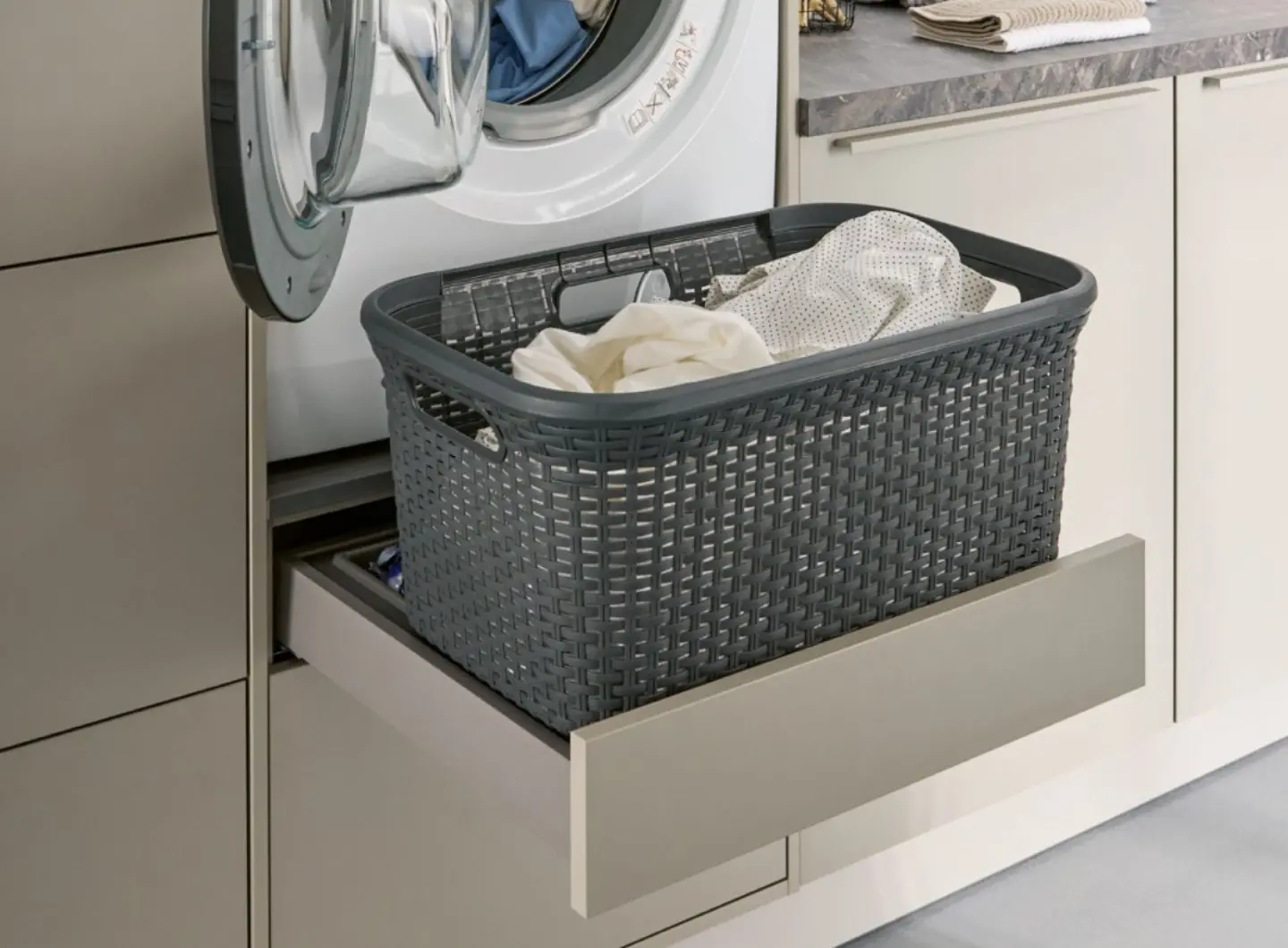
Small touches earn their keep. A hook rail keeps the odd stray glove off the worktop. A pull-out hamper hides the washing between loads. A drying rail that folds flat when it is not in use spares you draping wet clothes over every door in the house. None of this costs much, and together it is the difference between a room that fights you and one that quietly does its job, which is the entire reason to build a proper laundry room in the first place.
Worth doing properly
The mistake is treating the laundry room as leftover space to fill once the important rooms are done.
Plan the wet zone, choose surfaces that shrug off water, build in enough closed storage to hide the clutter, and sort the ventilation before anything else, and you get a room that quietly makes the whole house run more smoothly. Come and talk to us, and book a consultation to plan a laundry room that is as hard-working as it is calm to be in.